
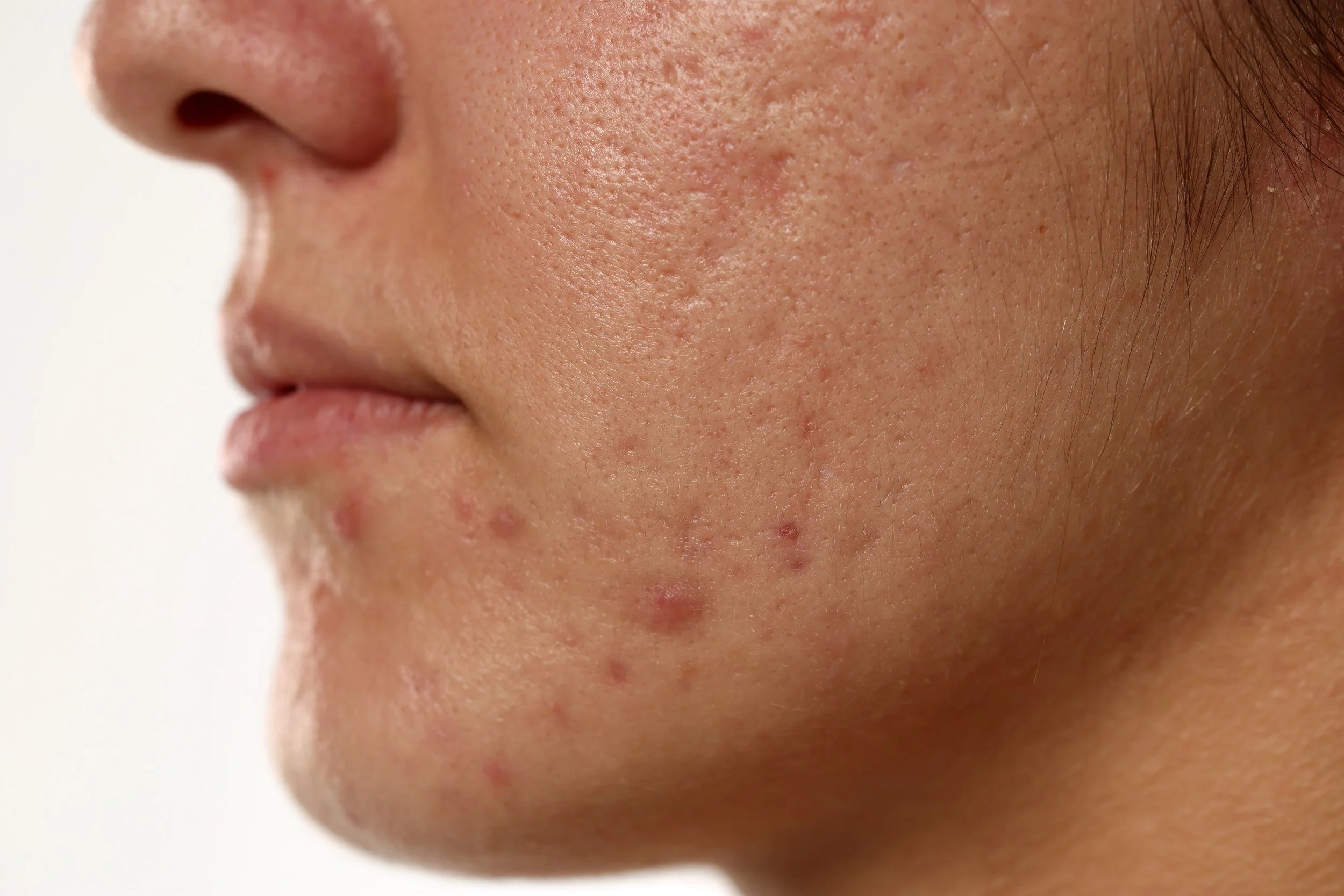
Most people who come to me about acne scars have been living with them for years. The breakouts are long gone, but the texture stayed, and so did the habit of avoiding harsh lighting or certain angles in photos. Many tell me they didn't think anything would really help.
The good news is that a lot can help. The best treatment for acne scars is a plan built around your scar type and your skin. In my studio, that usually means microneedling, TCA, a medium-depth peel series, or a combination. Sometimes the best results come from pairing those with prescription topicals or treatment from your dermatologist or plastic surgeon.
What is an acne scar?
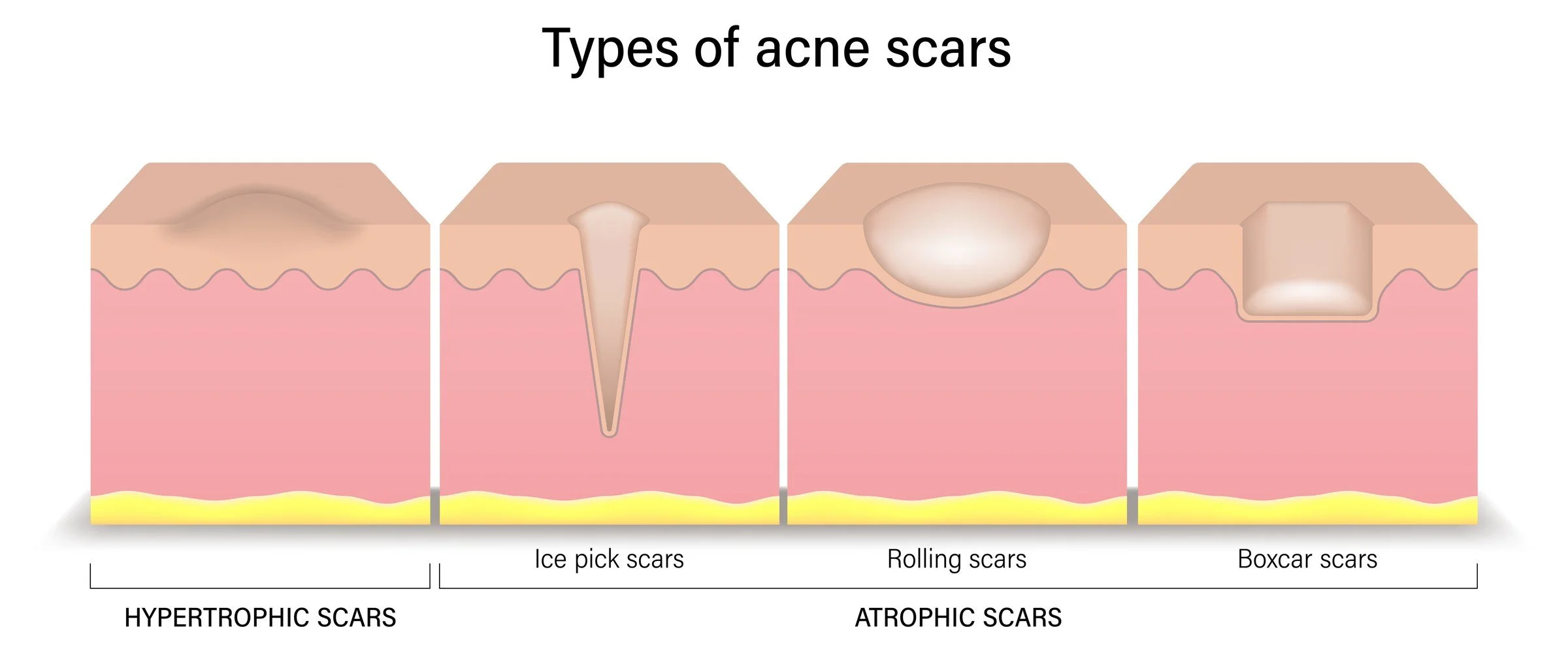
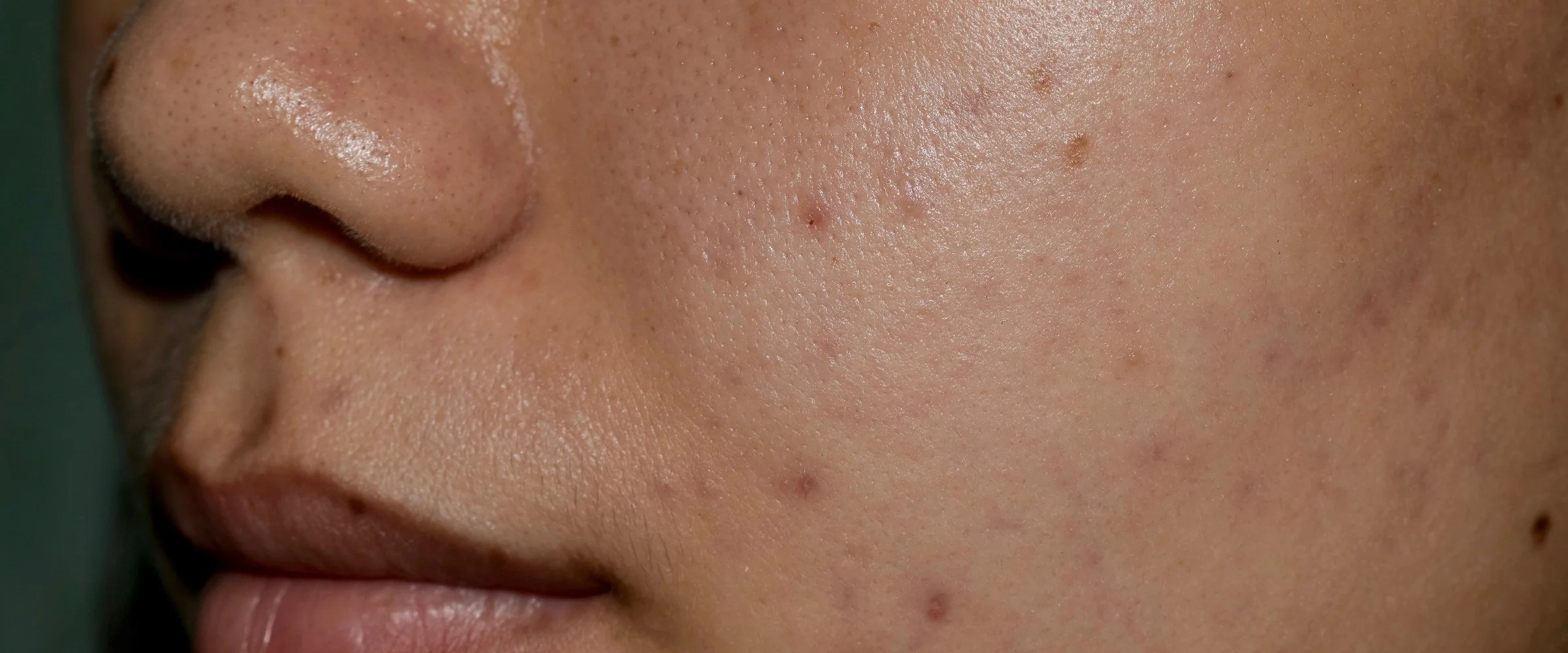
When a deep breakout heals, the skin either loses collagen or rebuilds it unevenly. That leaves behind rolling scars (soft, wave-like dips), boxcar scars (wider dips with defined edges) or ice pick scars (narrow, deep pits). Less often, the skin overcorrects and forms a raised scar. Flat red or brown marks after a breakout are a little different. They aren't true scars, but they often show up alongside them, and they can be treated too.
Which treatments help acne scars?
Research shows that combining treatments often gives better results than any single one.
Microneedling: very fine needles gently prompt your skin's natural repair response. Over a series, new collagen helps soften texture and lift rolling and boxcar scars.
TCA: a targeted acid treatment for ice pick and other deep, narrow scars that encourages the skin to rebuild from the base of the scar.
Medium-depth peel series: resurfaces the skin to refine texture and fade the discoloration acne leaves behind.
LED light therapy: calms the skin and supports healing between treatments. LED can also be done at home, but not every device is worth the money, and many don't deliver what they promise. I'm happy to recommend one that does.
Some scars are tethered to the tissue underneath, so they stay pulled down no matter how much collagen we build. These often respond best to subcision, a procedure that releases the bands holding the scar down. For those, I work collaboratively with a dermatologist or plastic surgeon, and microneedling can help smooth what's left.
How many treatments will I need?
As little as one treatment can make a difference, but most people benefit from a series. The right number depends on your scar type, depth and skin, and collagen keeps building for months after your last treatment.
Does my acne need to be under control first?
Active acne should be managed, but some of these treatments can also help with that. We'll look at both when we meet.
Is acne scar treatment safe for deeper skin tones?
Yes, with the right approach. Deeper skin tones have a higher risk of dyspigmentation, meaning uneven darkening or lightening after treatment. I take precautions with how I prepare the skin, which formulation I choose, the depth I work at and how treatments are spaced. This is where experience matters most, and it's where my skill lies.
What do I tell my clients?
We're aiming for real improvement. Most people are surprised by how much changes.
Sticking with your series matters more than doing the most aggressive treatment.
Daily sunscreen protects your results and helps prevent new dark marks.
Be patient with yourself. Collagen takes time, so results keep improving for months.
Why see me for acne scars?
I've been a Master Esthetician for over 20 years, including more than a decade in dermatology, with thousands of successful cases behind me. Scar work is some of the most rewarding work I do. If you also have a surgical scar, my post on microneedling for surgical scars covers that too.
If you're ready to talk about your skin, book a complimentary consultation.
Warmly,
Amy
Amy Morgan is a Master Esthetician at Fine Line in Seattle.
Sources: Shen et al., Aesthetic Plastic Surgery, 2022; Woźna et al., Advances in Dermatology and Allergology, 2025.
Are you an esthetician who wants to treat acne scars with confidence? Learn more about my microneedling certification.